
Across eyewear shopping communities and optometry forums online, the same question comes up week after week: 'Does this suit me?'
Not "is this affordable?" Not "will it arrive fast?" The question that stops eyewear shoppers in their tracks is almost always about confidence, not cost.
For e-commerce brands, that single pattern explains more about cart abandonment than any funnel analysis.
What Shoppers Say When They Abandon
The language of eyewear abandonment is consistent across forums, review threads, and customer feedback. It is rarely about price.
Shoppers who don't convert say things like: "I couldn't tell if they'd suit me." "I wasn't sure about the fit." "I needed to see them on my face."
That language points to a specific problem: the decision gap. The moment between browsing and buying where a shopper needs enough confidence to commit - and doesn't find it.
It is worth noting what shoppers don't say. They don't say the price was too high, the shipping was too slow, or the return policy wasn't clear enough. Those frictions exist, but they are rarely the reason a well-qualified shopper walks away from eyewear they genuinely liked.
Why Late-Funnel Fixes Don't Solve an Early-Funnel Problem
The default response to low conversion in e-commerce is to optimise the funnel: simplify checkout, refine the returns policy, add payment options, test discount prompts.
These are legitimate improvements. But they are all late-funnel interventions applied to what is fundamentally an early-funnel problem.
When a shopper reaches checkout still unsure whether the frames suit their face, no amount of one-click purchasing will close that gap. The uncertainty was formed two steps earlier - during product selection - and it travels forward into the cart.
Eyewear brands that focus exclusively on checkout optimisation are addressing the symptom. The root cause is hesitation, and it forms at the point of selection.
What Decision Confidence Is (And Isn't)
Decision confidence is the point at which a shopper feels certain enough to commit without prolonged comparison or further reassurance.
In eyewear specifically, that confidence requires three things:
- The ability to see frames realistically on their own face
- Enough information about fit and proportion to stop second-guessing
- A sense that the choice is theirs - guided, not pressured
What decision confidence is not: a faster checkout. A longer product description. A better hero image. A bolder CTA button.
Those elements support conversion. They don't create the confidence that makes it possible.
How Virtual Try-On Becomes a Conversion Tool
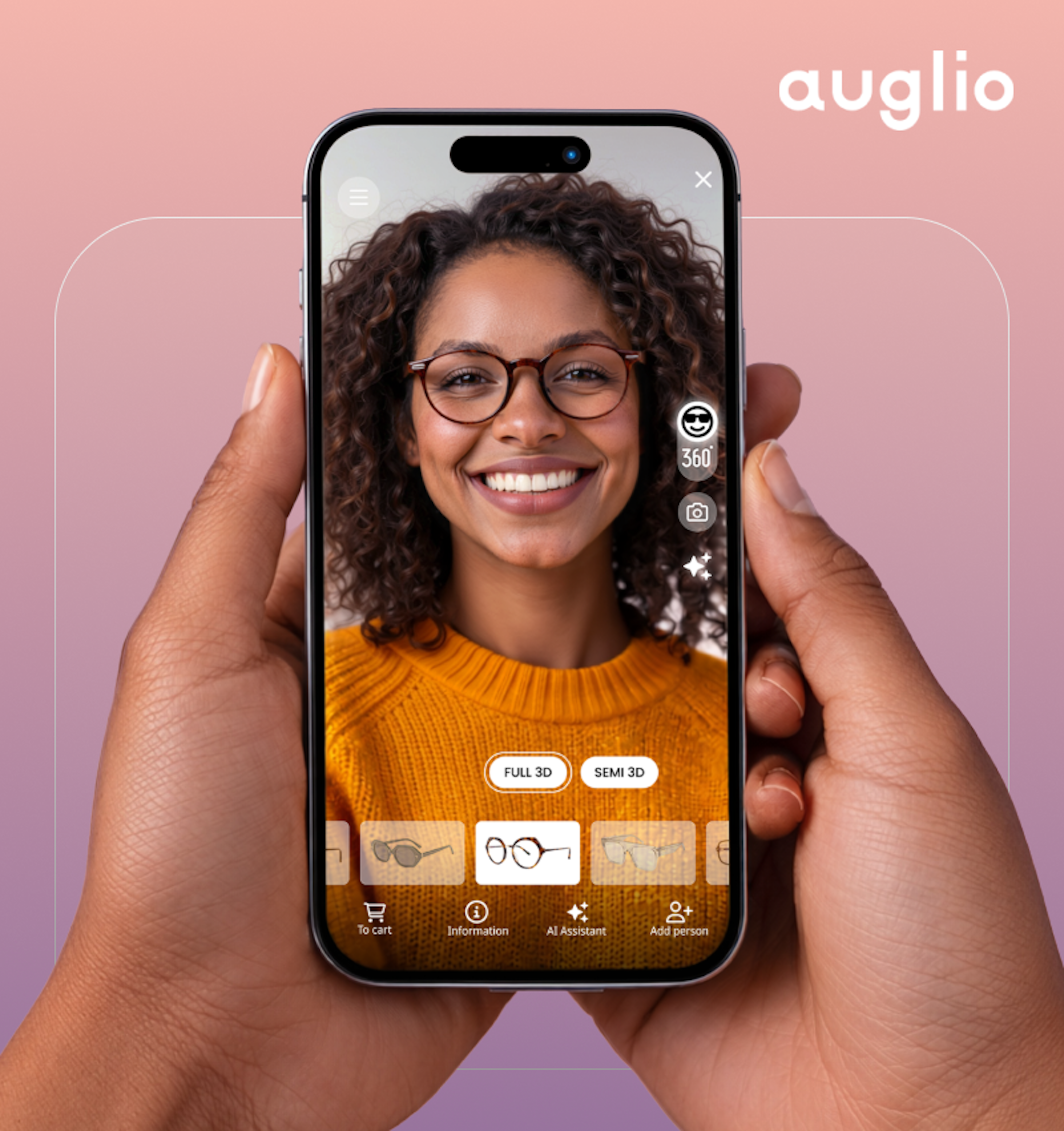
Virtual try-on is widely used in eyewear e-commerce - and widely underperforming as a conversion driver.
The reason is usually positioning. When virtual try-on is treated as a feature - a badge on the product page, an optional extra - it generates engagement without materially affecting decisions. Shoppers try it, enjoy it, and leave anyway.
When virtual try-on is embedded in the decision flow - surfaced at the moment of hesitation, integrated with face shape guidance, designed to answer the question "will this suit me?" rather than just to demonstrate the technology - the dynamic changes.
The difference between virtual try-on as entertainment and virtual try-on as a decision tool is not technological. It is intentional. It comes from designing the experience around the shopper's question, not around the brand's product.
"Customers don't abandon eyewear carts because they can't afford the frames. They abandon them because they're not sure."
The Shift From Feature to Decision Support
Assisted shopping reframes virtual try-on from a product feature into a decision support system.
Instead of displaying a digital overlay and hoping the shopper draws the right conclusion, assisted shopping structures the experience around the decision itself. It guides customers at the moments they need reassurance - when comparing multiple frames, when uncertain about fit, when browsing without a clear direction.
Brands that build this kind of decision infrastructure outperform those that compete on price. Not because their products are better, but because their shoppers leave the product page confident instead of uncertain.
The goal is not to make the shopping experience more impressive. It is to make it easier to decide.
What This Means for Your Eyewear Store
If your store has strong traffic and conversion that doesn't reflect it, the gap is almost certainly forming before checkout - at the moment a shopper thinks "I'm just not sure."
That's the moment virtual try-on and assisted shopping are designed for. Not to impress, but to help decide.
The brands that solve this problem first will have a durable advantage - not just better conversion numbers, but fewer returns, shorter purchase cycles, and customers who come back because the experience gave them confidence rather than anxiety.
Want to see how Auglio addresses this for your store?
We'll walk you through exactly how virtual try-on and assisted shopping integrate into your decision flow - and what that typically does to conversion.
→ Book a demo at auglio.com/en/contact
Tags: Virtual Try On Assisted Shopping Technology Eyewear e-commerce E-commerce conversion Eyewear e-commerce Customer confidence AI personalization